In a country geographically positioned along the Pacific Ring of Fire and directly in the path of the Pacific typhoon belt, disaster preparedness is an integral part of the Filipino lifestyle. The Philippines faces an average of twenty typhoons a year, alongside the constant, unpredictable threat of earthquakes, volcanic eruptions, and heavy monsoons. For generations, surviving these natural calamities has required resilience, community cooperation, and access to timely, life-saving information.
In our highly connected, digital age, we have grown accustomed to relying on our smartphones, social media feeds, and instant messaging applications for our daily news updates. We receive push notifications about impending rain, we watch live streams of weather reports, and we coordinate with family members via Facebook Messenger. However, history has repeatedly and tragically shown that when the true fury of nature strikes—when the power grid goes down, the internet drops, and cellular networks collapse entirely—one piece of technology consistently remains standing, cutting through the silence and the storm: AM Radio.
While it may seem like an antiquated, old-fashioned piece of technology in the modern era of 5G connectivity and gigabit fiber internet, the traditional AM (Amplitude Modulation) radio remains the ultimate lifeline during a severe crisis. Let us dive deep into why this enduring medium is critical for disaster survival, the fascinating science behind how it works, and why absolutely every Filipino household needs one in their emergency arsenal.
The Fragility of Modern Digital Infrastructure
To understand the value of an AM radio, we must first understand the inherent vulnerabilities of the modern technology we carry in our pockets. Our digital communication networks are incredibly fast and efficient, but they are also deeply fragile and heavily dependent on a continuous supply of electricity and physical infrastructure.
During a catastrophic super typhoon—such as Typhoon Haiyan (Yolanda) in 2013 or Typhoon Odette in 2021—one of the first casualties is the local power grid. Strong winds easily snap concrete electric posts, and fallen trees bring down power lines, plunging entire provinces into darkness. Once the main electricity supply is severed, cellular communication towers are forced to switch to their backup diesel generators. Depending on the site, these generators may only hold enough fuel to run for 24 to 48 hours. Once that fuel is exhausted, the cell tower goes dead, and with it, all mobile phone reception in the area.
Furthermore, smartphones themselves are fundamentally limited by their battery life. Even the most advanced phones typically require recharging after a single day of active use. In a scenario where power might not be restored for weeks or even months, a smartphone quickly transforms into a useless glass brick. Fiber optic cables and broadband lines, which deliver high-speed internet to our homes, are strung along the very same poles that get knocked down by the storm.
In short, when a severe disaster strikes, the highly complex, interconnected digital world we rely on can vanish in a matter of hours, leaving communities dangerously isolated from the outside world and utterly blind to incoming rescue efforts or secondary threats.
The Resilience and Science of AM Radio Waves
This is where the magic and robust engineering of AM radio steps in. Unlike FM (Frequency Modulation) radio or mobile cellular data, which rely on line-of-sight transmission and have a relatively short, easily obstructed range, AM radio waves operate on entirely different scientific principles.
AM signals are broadcast on much lower frequencies (typically between 535 to 1705 kilohertz) and utilize much longer wavelengths. These longer waves have a unique and powerful characteristic: they can travel by both “groundwave” and “skywave” propagation.
During the daytime, AM signals travel along the surface of the Earth as groundwaves. Because of their long wavelength, they can easily pass through and bend around massive physical obstacles. They can penetrate deep into thick concrete buildings, travel over vast mountain ranges, and cut through dense, torrential storm clouds without losing significant fidelity.
At night, the phenomenon becomes even more remarkable. The AM signals travel upward and bounce off the ionosphere—a layer of the Earth’s upper atmosphere—reflecting back down to the ground hundreds or even thousands of kilometers away from the original transmitter. This is known as skywave propagation. It is this scientific phenomenon that allows someone in a remote, mountainous province in Mindanao to clearly pick up a broadcast originating all the way from Metro Manila.
Because AM radio transmitters operate at incredibly high power levels (often 50,000 watts or more) and their signals can travel such vast distances, a single station can provide critical coverage to millions of people across multiple islands. This makes AM radio the ideal, and frequently the only, medium capable of reaching isolated municipalities when local infrastructure has been wiped out.
Low Power Consumption, Maximum Reliability
The resilience of the AM broadcast signal is perfectly complemented by the resilience of the radio receiver itself. One of the greatest practical advantages of an AM radio in an emergency scenario is its incredible energy efficiency.
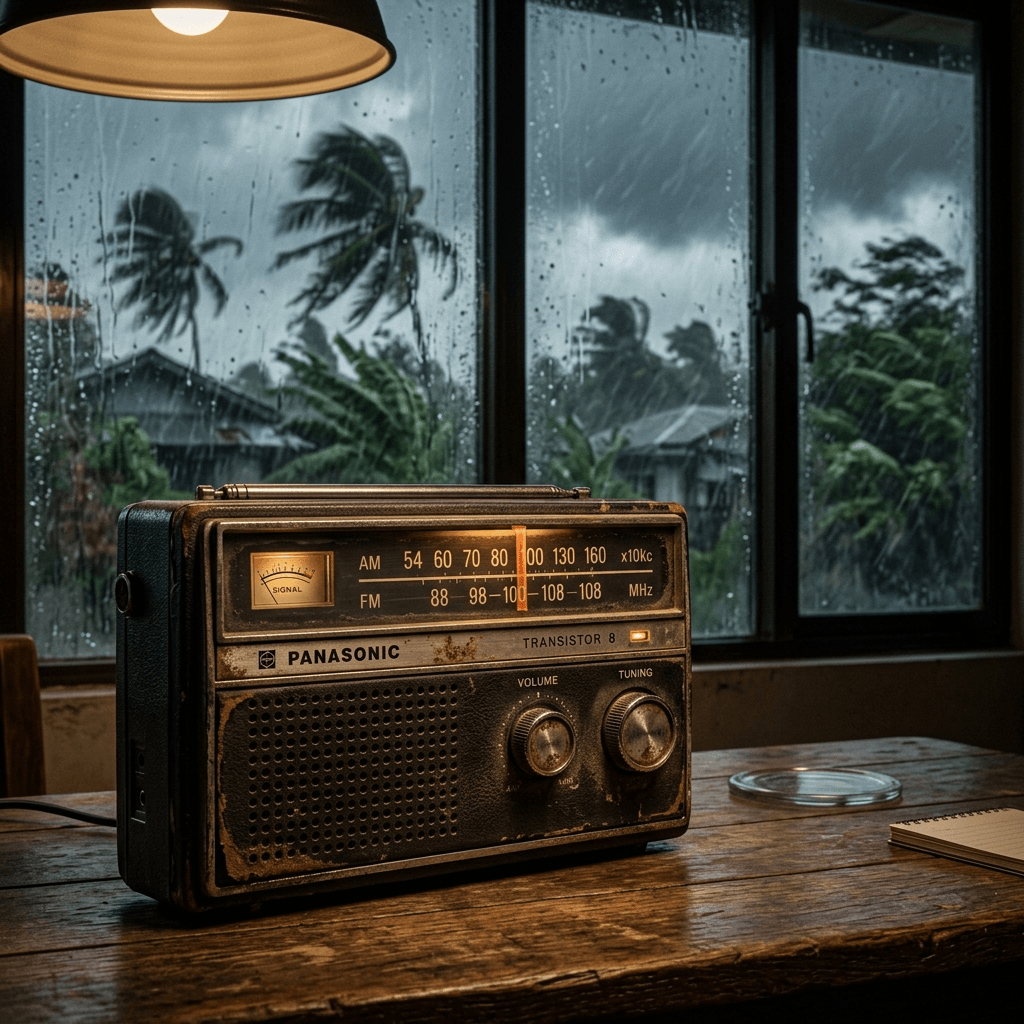
A simple, inexpensive analog transistor radio does not have a bright, battery-draining touchscreen or a complex operating system running background applications. It does exactly one thing: it captures and amplifies radio waves. Because of this singular focus, a basic transistor radio can run continuously on a couple of standard AA or AAA dry-cell batteries for days, and sometimes even weeks.
In a prolonged power outage where charging a smartphone is an absolute impossibility, the humble battery-powered radio continues to function flawlessly. It provides a steady stream of vital news, continuous weather updates, emergency evacuation protocols, and instructions from rescue teams. Moreover, many modern emergency radios are specifically designed for these scenarios, coming equipped with built-in hand-cranks and small solar panels. This ensures that even if you completely run out of batteries, you can generate enough power with a few minutes of cranking to keep the radio playing, guaranteeing that you will never be completely cut off from critical information.
A Source of Verified Truth and Expert Reporting
During a fast-moving, chaotic disaster, the spread of accurate information is just as important as the distribution of food and water. Unfortunately, social media platforms like Facebook, Twitter, and TikTok can often become breeding grounds for rumors, panic, and deliberate misinformation during times of crisis.
Fake news about impending tsunamis, fabricated reports of dam collapses, or false instructions regarding rescue operations can cause unnecessary panic, misdirect valuable rescue resources, and put innocent lives at severe risk. When the situation is dire, you cannot afford to rely on unverified posts shared by anonymous accounts.
AM radio stations in the Philippines have built decades of trust precisely because they are a source of verified truth. Flagship stations such as Super Radyo DZBB, DZRH, Radyo Patrol, and Radyo Pilipinas employ vast networks of professional journalists, field reporters, and technical experts. During a disaster, these stations drop their regular programming to provide wall-to-wall, uninterrupted emergency coverage.
They serve as the direct communication line for official government agencies. When you tune in to these stations, you are getting immediate, vetted, and life-saving facts directly from the experts at PAGASA (Philippine Atmospheric, Geophysical and Astronomical Services Administration), the NDRRMC (National Disaster Risk Reduction and Management Council), and the Philippine Coast Guard. The broadcasters on these stations are trained to stay calm, verify their sources, and deliver actionable advice, helping citizens make safe, informed decisions when every second counts.
The Psychological Comfort of the Human Voice
Beyond the delivery of hard facts and weather bulletins, the radio provides something equally vital during a disaster: psychological comfort.
Imagine sitting in the dark, the wind howling violently outside, your home shaking, and your children terrified. The electricity is gone, and the silence inside the house is deafening. Turning on an AM radio and hearing a calm, steady human voice cuts through the isolation and the fear.
The broadcaster sitting in the studio becomes an anchor to normalcy. Hearing them take calls from other affected citizens, coordinating rescue efforts, and constantly reassuring the public that help is on the way provides immense emotional relief. It reminds the listeners that they are not alone in the dark, that the rest of the country is aware of their plight, and that a massive, coordinated effort is underway to assist them. This psychological lifeline is often just as crucial for survival as the physical preparations.
Essential for the Emergency Go-Bag
Disaster preparedness experts, government agencies, and humanitarian organizations universally agree: a family’s emergency “Go-Bag” is completely inadequate if it does not contain a portable AM/FM radio.
When preparing your household for the typhoon season or the “Big One” (the anticipated major earthquake in Metro Manila), your Go-Bag must be stocked with the essentials for 72 hours of survival. Alongside your bottled water, non-perishable canned goods, comprehensive first-aid kit, flashlights, extra batteries, and important documents, a transistor radio is a non-negotiable item. It is the tool that ensures you remain connected to the outside world, guiding you toward relief centers and warning you of secondary hazards like aftershocks or flash floods.
Conclusion: Bridging Tradition and the Digital Future
While we rightly celebrate the incredible convenience and capabilities of digital technology, we must never forget the reliable, unyielding endurance of analog broadcasting. The AM radio is not a relic of the past; it is a proven, battle-tested tool that has saved countless Filipino lives and will continue to do so in the future. As part of your family’s safety plan, ensure you have a working, battery-operated AM radio ready to go at a moment’s notice.
However, the reach of AM radio now extends far beyond the physical borders of the Philippines. For our Overseas Filipino Workers (OFWs) and the millions of Filipinos living abroad, the anxiety of knowing a massive typhoon is hitting their home province can be overwhelming. They want to monitor the situation, hear the local news, and understand exactly what their families are going through.
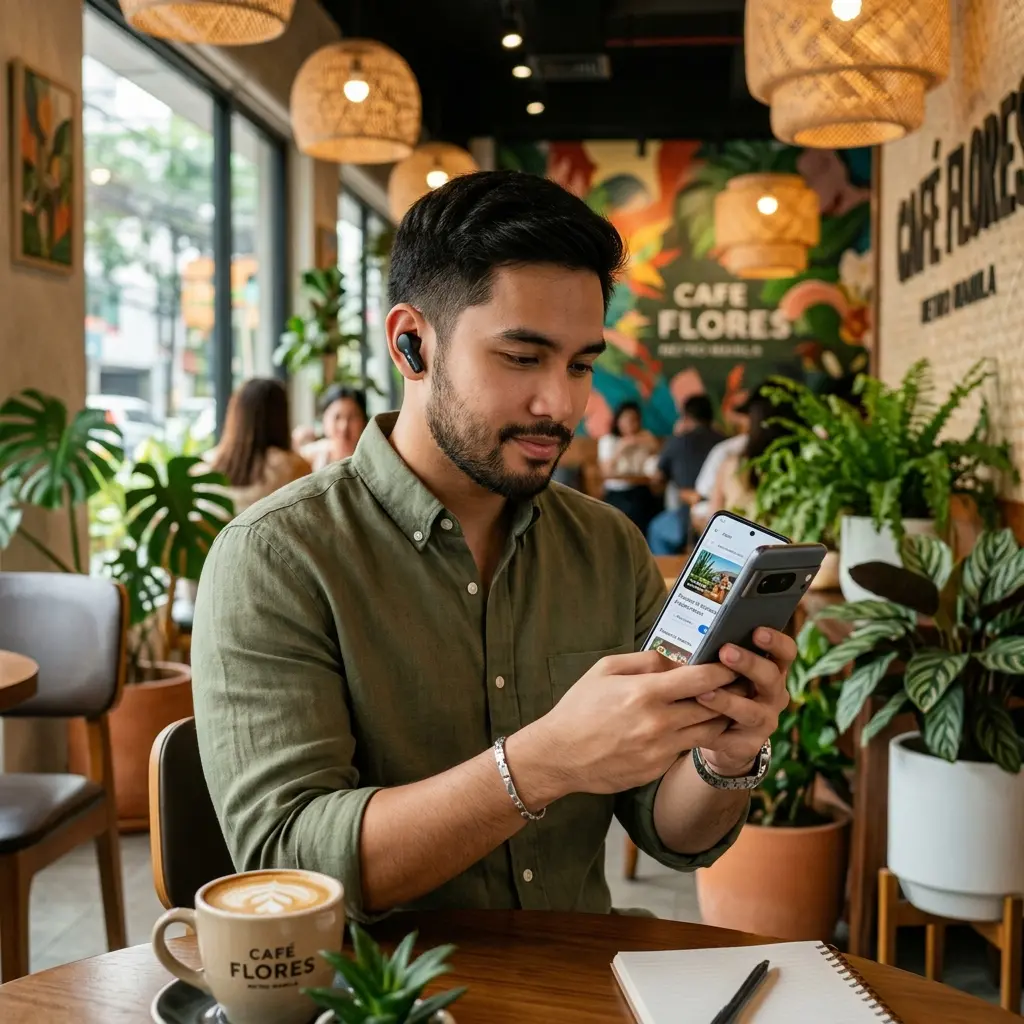
This is where digital platforms like Pure Pinoy Radio step in to bridge the gap between traditional reliability and global accessibility. We are proud to carry and stream the broadcasts of these vital local AM stations online. This allows Filipinos anywhere in the world—from the Middle East to North America—to tune in to the exact same broadcasts their families are listening to back home on their transistor radios. It keeps the global Filipino community connected, informed, and united, especially when it matters the most. Stay safe, stay prepared, build your Go-Bags, and always keep tuning in.